07/07/2026
Self - Belief

I was fascinated by the recent successful attempt by Scottish athlete, Josh Kerr, to break the world record for the mile: a record which has stood for 27 years!
What made this attempt so unusual is that Josh stated as early as March 2026 that he would break the world record in July at the London Diamond League event. What he predicted, (or more accurately, promised), he achieved.
This was unusual because it was an extreme example of confidence and self-belief. Josh, like many other high achievers, has pointed out that we are all capable of achieving far more than we allow ourselves to believe, not just in athletics or other sporting events but in any of area of life.
I’ve been thinking about this in relation to art. Like music, it’s one of those areas in which many lack belief in their own ability. I suspect that you, like me, have heard people say, ‘I’m tone deaf’ when it comes to music, or ‘I’m useless at drawing’ when it comes to art. Perhaps you’ve said similar things yourself. Such statements may be true in the eyes of the speaker, but in reality, they are false.
How easily we convince ourselves what we can’t do! Perhaps years ago a teacher was unduly critical and told us where we lack ability and what they said has stuck. We came to believe them!
In recent years I’ve undertaken a number of art courses. Many have begun with questions such as, ‘What is your dream?’ followed by encouragement to think big.
It’s not that by believing that we can will lead to immediate success or stardom, but if we allow ourselves to follow the path of self-belief as we commit ourselves to achieve our dreams, then we may well achieve tomorrow what we thought impossible today.
Why are watercolours considered a difficult medium?
Watercolour painting is widely regarded as one of the most challenging art mediums to master, primarily because it is inherently unpredictable and unforgiving. Unlike oil or acrylic paints, which are opaque and allow for correction by painting over mistakes, watercolours are transparent, meaning errors often show through subsequent layers. This transparency creates a high-stakes environment where, once the white of the paper is covered or a mistake is made, it is often impossible to reverse the process fully, requiring artists to work from light to dark and plan their composition in reverse.
Another major difficulty is the fluid, active nature of the medium. The paint is only truly manageable while wet, requiring a constant, high-speed battle against drying times. As pigment flows with water across the paper, controlling its final position is difficult, leading to accidental blooms or "cauliflowers". Furthermore, watercolour paints dry lighter than they appear when wet, making it tricky to gauge the final value and tone of the painting until it is too late to change.
The technical proficiency required to manage water-to-pigment ratios also demands significant practice and patience. Beginners often struggle with the "wet-on-wet" technique, where paint spreads uncontrollably, or "wet-on-dry," which can look patchy if not executed correctly. To add to these challenges, the quality of supplies - specifically 100% cotton paper and specialized brushes - is critical, as lower-quality materials often buckle or produce muddy, unsatisfactory results. For years, I’ve been using the best materials, i.e., 100% cotton paper, fine quality brushes, and professional artists’ watercolour paints.
Ultimately, watercolour requires a delicate balance of careful planning and spontaneous, loose brushwork. It demands the artist relinquish complete control, collaborating with the water rather than forcing it, which makes the learning curve intimidating yet rewarding.
I’ve been painting in watercolours for over 40 years and still face challenges. I produce paintings that I never show online or in exhibitions because I’m not happy with them. I’ve taken on commissions and had to start again because of a mistake that can’t be corrected. That’s the bit you don’t see!
Does age matter?
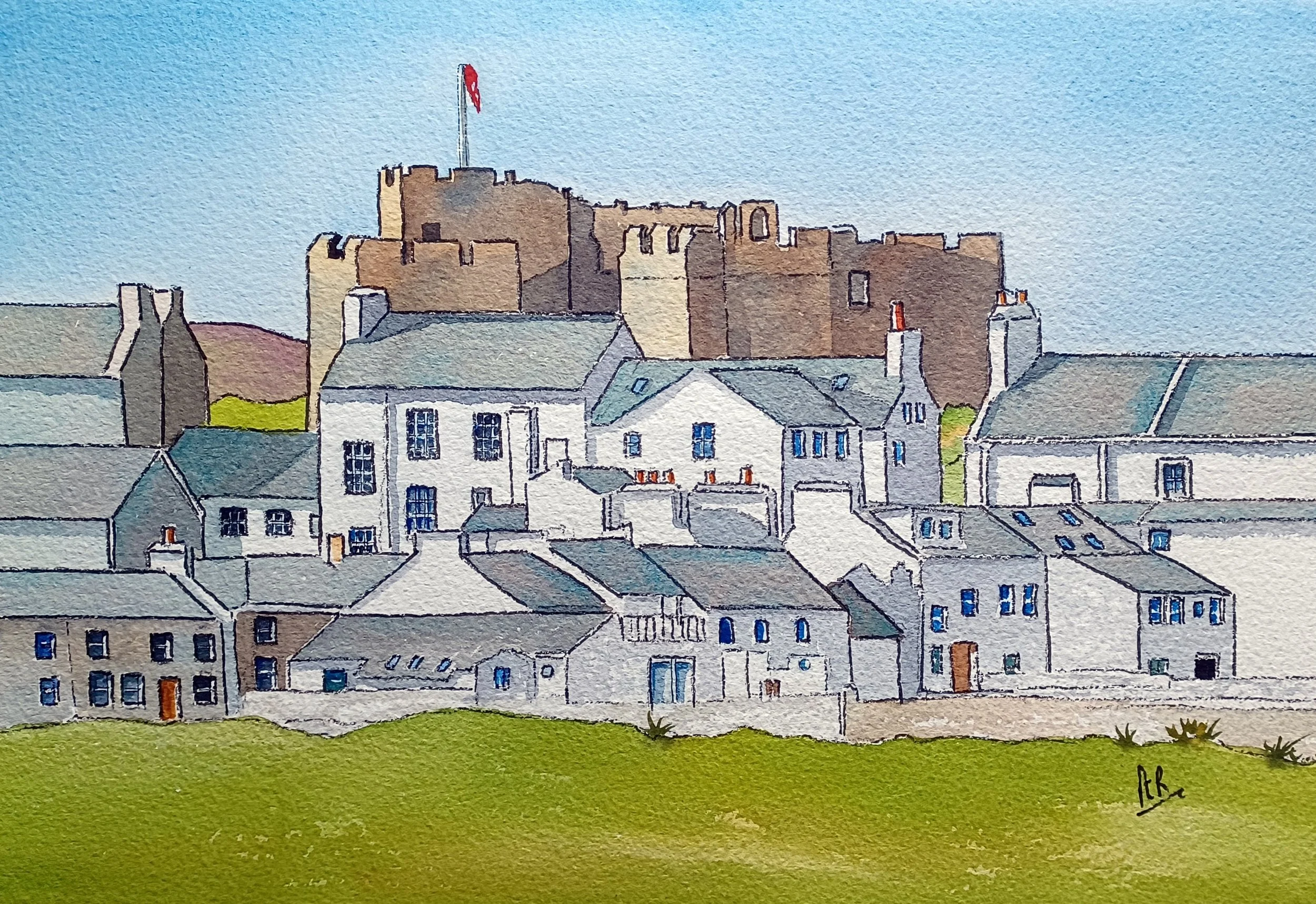
I’m loving pen & watercolour. It has a slightly quirky feel about it. It’s fun to do!
When I post an advert selling my watercolours on Facebook, I sometimes wonder, ‘Whose been looking?’ ‘Which country are they from?’ ‘What age group are they in?’ ‘Does it matter anyway?’
I’ve recently introduced a new dimension to my painting style. I’ve had a go at pen & watercolour. The first paintings in this style have proved popular. Two sold almost as soon as I posted them on social media.
When I looked at the ‘analytics’, I got a surprise. The paintings in the new style led to a dramatic shift in the age profile of those responding. Previously, my paintings have been by far the most popular with the 65+ age group. Younger groups showed less interest. As soon as I started producing paintings in pen & watercolour, a younger age group (35-44yrs) became by far the largest group showing interest.
Does age matter? Not to me, but perhaps we underestimate how style, even with slight changes, can influence the audience.
I’m loving pen & watercolour. It has a slightly quirky feel about it. It’s fun to do!
Watch this space, whatever your age!! - www.peterrobinsonart.org